
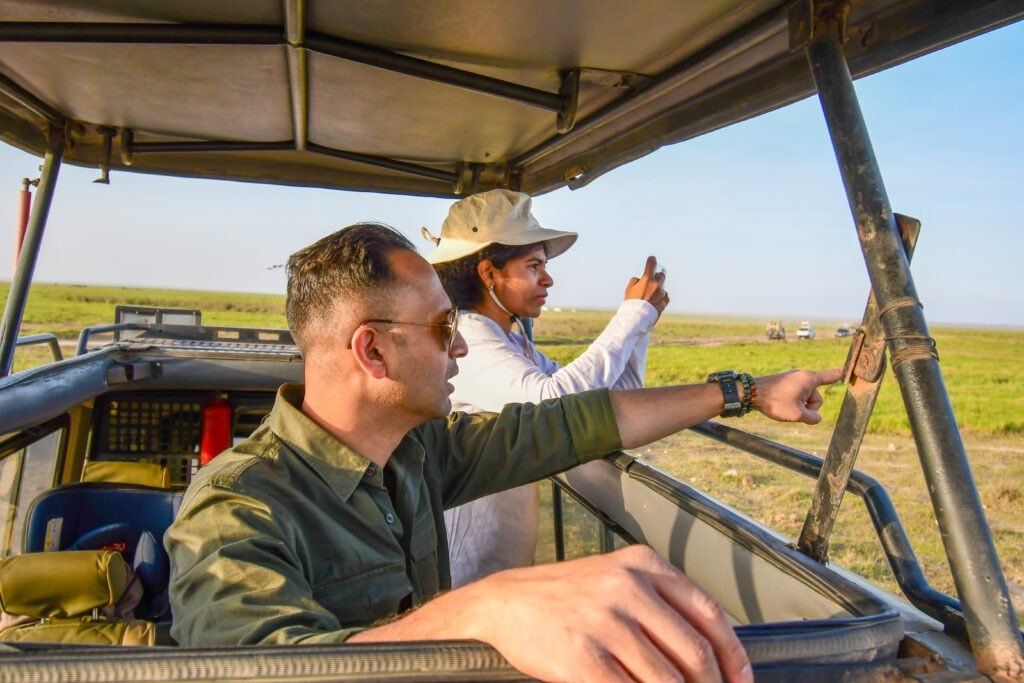
Amboseli Day Trip vs. Overnight Safari: Which Experience Is Right for You?
Some safari decisions are about where to go. Others are about how much time to give the place.
Amboseli National Park is known for its large elephant herds, open landscapes and the possibility of seeing Mount Kilimanjaro beyond the plains. It is also a destination where the time you have available can shape your experience.
A one-day Amboseli safari from Nairobi can introduce you to the park if your schedule is tight. An overnight safari gives you more time to explore, rest between game drives and experience the landscape at different times of day.
So, should you choose a day trip or stay for two or three days?
The answer depends on your available time, budget and what you hope to experience.
Is a one-day Amboseli safari worth it?
Yes, a one-day Amboseli safari can be worthwhile if you have just one free day in Nairobi and understand the trade-off: a long road journey for a relatively short time inside the park.
The drive from Nairobi to Amboseli generally takes around four to five hours each way, depending on the route, traffic and road conditions. That makes an early departure essential.
Once inside the park, you can enjoy guided game drives and look for elephants, zebras, giraffes, buffalo and other wildlife. You may also enjoy views of Mount Kilimanjaro when the weather is clear.
But wildlife does not follow a timetable. No operator can guarantee particular animal sightings or clear mountain views.
A day trip works best when you want a concentrated wildlife experience and are comfortable spending a substantial part of the day travelling.
Explore the one-day Amboseli safari from Nairobi.
What do you gain from staying overnight?
An overnight safari changes the rhythm of the journey.
Instead of returning to Nairobi on the same evening, you stay near the park and have more time for game drives. Depending on the itinerary, you may experience an afternoon drive on arrival, an early-morning drive the following day and additional time to explore different habitats.
Amboseli’s wetlands, open plains and acacia woodland support a variety of wildlife and birdlife. Having more time allows your guide to adjust the route to conditions and wildlife activity.
You also have time to enjoy the lodge or tented camp, relax between activities and appreciate the surroundings without immediately preparing for a long return journey.
For travelers who want more than a quick introduction, an overnight stay is often the more comfortable choice.
One day vs. two or three days in Amboseli
| Consideration | One-day safari | Two-day safari | Three-day safari |
|---|---|---|---|
| Best for | Travelers with one free day | A short but more immersive safari | Travelers wanting a slower pace |
| Road travel | Long return journey in one day | Spread across the itinerary | More time to balance travel and wildlife viewing |
| Game drives | Limited by the return schedule | More opportunities across different times | Greater flexibility for additional drives |
| Accommodation | Usually no overnight stay | One night | Typically two nights |
| Overall pace | Fast | More balanced | More relaxed |
| Cost | Avoids overnight accommodation | Includes accommodation and additional activities as specified | Higher overall trip cost, depending on the package |
Exact timings, accommodation and inclusions depend on the package selected. Compare the written itineraries rather than choosing on duration alone.
Which wildlife experiences can you expect?
Amboseli is particularly well known for elephants. You may encounter family groups moving between feeding areas and wetlands, watch animals from a respectful distance or observe the interactions between members of a herd.
Other wildlife may include zebras, wildebeest, giraffes, buffalo, antelopes and predators such as lions or hyenas. Birdlife is another attraction, particularly around the park’s wetland habitats.
Mount Kilimanjaro adds a striking backdrop when visibility allows. Early mornings can offer good photographic conditions, but clouds and weather can obscure the mountain at any time of year.
The important distinction is that these are opportunities, not guarantees. A responsible safari focuses on observing wildlife without disturbing it.
For official park information, consult the Kenya Wildlife Service guide to Amboseli National Park.
Is the day trip cheaper?
A day trip can cost less overall because you avoid an overnight accommodation charge. However, the price depends on the number of travelers, transport arrangement, park fees, meals and other inclusions.
A private vehicle may have a different per-person cost from a shared arrangement. An overnight safari adds accommodation and potentially more meals and game drives, but it also provides additional time in the park.
Ask for a written quotation that clearly states:
- Transport and pickup arrangements.
- Park entry fees.
- Driver-guide services.
- Meals and drinking water.
- Accommodation, where applicable.
- Any optional activities or additional charges.
Compare the total cost and the experience included, not just the headline price.
Who should choose each option?
Choose a one-day Amboseli safari if:
- You are staying in Nairobi and have only one free day.
- You want to experience Amboseli without extending your holiday.
- You are comfortable with an early departure and a late return.
- You understand that game-viewing time will be limited.
- One day Aboseli safari
Choose a two-day safari if:
- You want at least one overnight stay.
- You would like more than one opportunity for game drives.
- You prefer to break up the journey.
- Your schedule allows a short extension.
- 2 days Aboseli safari
Choose a three-day safari if:
- Wildlife viewing is a major reason for your trip.
- You want more time for photography and observing animal behaviour.
- You prefer a less rushed itinerary.
- You want to enjoy the accommodation and landscape as part of the experience.
- 3 days Aboseli safari
If Amboseli is one stop on a longer Kenya safari, a multi-day itinerary may also fit more naturally with destinations such as Tsavo or the Rift Valley.
Our recommendation
There is no need to turn a one-day safari into a longer trip if you genuinely have only one day available. A carefully planned day trip can still be a memorable introduction to Amboseli.
But if you can spare two or three days, the extra time gives you more flexibility and reduces the feeling of having to race back to Nairobi.
At Annest Kenya Safaris, we can help you compare the available itineraries based on your dates, group size and preferred style of travel.
Ready to experience Amboseli?
View our Amboseli day trip from Nairobi or explore our two-day Amboseli safari.
Frequently asked questions
How long does an Amboseli day trip from Nairobi take?
Plan for a full day, with an early departure and an evening return. The drive is generally around four to five hours each way, but traffic and road conditions can change the schedule.
Can I see Mount Kilimanjaro on a day trip?
You may see the mountain when conditions are clear. Visibility varies with weather and cloud cover, so the view cannot be guaranteed.
Is one day enough to see elephants in Amboseli?
Amboseli is well known for its elephant herds, and elephants are among the wildlife you may encounter. Sightings and the time spent observing them depend on animal movements and conditions in the park.
Is a two-day Amboseli safari better than a day trip?
For travelers who can stay overnight, two days usually offer more flexibility for game drives and a less rushed experience. A day trip remains an option when time is limited.
How do I book an Amboseli safari with Annest Kenya Safaris?
Contact us with your preferred dates, number of travelers and trip duration. We can confirm the available itinerary, price, transport, park fees and other inclusions before you book.