
Sheldrick Wildlife Trust Nairobi: How to Visit the Elephant Orphanage
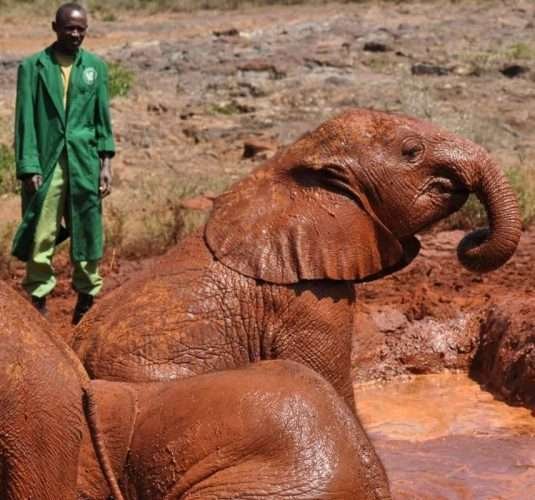
There is something special about watching a young elephant emerge from the forest, hurry towards its keepers and roll enthusiastically in a mud bath.
At the Nairobi Nursery of the Sheldrick Wildlife Trust, visitors can observe rescued orphaned elephants during a carefully managed public visit while learning about the work involved in rescuing, raising and eventually reintegrating them into the wild.
Formerly widely known as the David Sheldrick Wildlife Trust, the organisation is one of Kenya’s best-known wildlife conservation charities. Its Nairobi Nursery is located inside Nairobi National Park, and public access is restricted to a scheduled, pre-booked visiting session.
If you are planning a Nairobi sightseeing day, a family outing or the start of a longer Kenya safari, this guide explains how the visit works, what it costs, how to book and how to combine it with other experiences.
Quick answer: what should you know before visiting?
- Location: Sheldrick Wildlife Trust Nairobi Nursery, inside Nairobi National Park.
- Public visiting time: 11:00 AM–12:00 noon.
- Booking: Advance booking is compulsory; same-day bookings are not accepted.
- Arrival: Aim to reach the designated park gate by 10:30 AM or earlier.
- Costs: The Trust’s nursery entry donation is separate from the Kenya Wildlife Service park entry fee.
- Experience: Observe orphaned elephants during their milk feed, mud bath and playtime while learning about their rehabilitation.
- Official booking: Sheldrick Wildlife Trust Nairobi Nursery Visiting.
Visiting rules, donations and park fees can change. Confirm the latest requirements with the Trust and Kenya Wildlife Service before travelling.
What is the Sheldrick Wildlife Trust?
The Sheldrick Wildlife Trust, previously known internationally as the David Sheldrick Wildlife Trust, is a conservation organisation known for rescuing and rehabilitating orphaned elephants and rhinos in Kenya.
The organisation’s Orphans’ Project gives vulnerable young elephants specialist care after circumstances such as poaching, human–wildlife conflict, drought or separation from their mothers leave them without the protection they need.
The Nairobi Nursery is the first stage in that journey. As the elephants grow and become ready, they move to reintegration units where they continue developing the skills needed for life in the wild.
The long-term goal is not to keep elephants dependent on people. It is to help them return to the wild when they are ready.
That conservation purpose is what makes a visit more meaningful than simply watching young animals play.
To understand the organisation’s work and arrange your visit, start with the official Sheldrick Wildlife Trust website.
Where is the elephant orphanage in Nairobi?
The Sheldrick Wildlife Trust Nairobi Nursery is located within Nairobi National Park, with access through the Kenya Wildlife Service Mbagathi Gate, also referred to in the Trust’s visitor information as the KWS Workshop Gate, on Magadi Road.
This is important when planning transport. You should not assume that your vehicle can simply drive straight to the Nursery without the required park-entry arrangements.
The time needed to reach the gate depends on your starting point, traffic and road conditions. Allow additional time for entry procedures and the transfer to the Nursery where applicable.
Official directions and current visitor instructions are available on the Nairobi Nursery visiting page.
What time can you visit the Sheldrick elephant orphanage?
The regular public visit takes place every day from 11:00 AM to 12:00 noon, except 25 December, according to the Trust’s official guidance.
The session is timed around the Nursery herd’s midday milk feed and mud bath. Visitors observe the elephants from designated viewing areas while a senior keeper explains their stories and the organisation’s conservation work.
The visit cannot be delayed or extended for late arrivals. The Trust recommends arriving at or before 10:30 AM to allow time to pass through the KWS gate.
| Visitor detail | What to know |
|---|---|
| Public visit | 11:00 AM–12:00 noon |
| Regular closure | 25 December |
| Advance reservation | Required |
| Same-day booking | Not accepted |
| Recommended gate arrival | By 10:30 AM |
| Visit duration | Approximately one hour |
Always check the official visiting page before setting off, particularly if you are visiting during a busy travel period.


How do you book a visit?
The most important step is to secure your official Nursery reservation before arranging the rest of your day.
The Trust states that bookings can only be made for visits within the next three months. Same-day bookings are not accepted, and daily capacity is limited.
Step 1: Choose your date
Select a date within the Trust’s permitted booking window and confirm that it is available.
Step 2: Follow the official booking instructions
Use the Trust’s Nairobi Nursery visiting page to follow its current booking procedure. The published instructions direct visitors to contact the Nairobi office by email with their preferred date and ticket details.
Step 3: Provide the required names and ticket information
The Trust requests the visit date, the number of adult and child tickets, each adult’s name, and each child’s name and age.
Step 4: Wait for official confirmation
Do not assume that sending an enquiry means your visit is booked. Wait for the Trust’s confirmation email and bring it with you, digitally or in print, on the day.
Step 5: Arrange your transport
Once your booking is confirmed, organise your pickup and allow enough time to reach the correct gate.
Important: The Trust states that only its own official booking confirmation is valid for entry. If you arrange transport or an excursion through Annest Kenya Safaris or another operator, make sure you receive the Trust’s official confirmation. A transport booking alone does not guarantee access to the Nursery.
How much does the Sheldrick Wildlife Trust visit cost?
There are two separate costs to understand:
- The donation paid to the Sheldrick Wildlife Trust for entry to the Nursery.
- The applicable Kenya Wildlife Service entry fee for Nairobi National Park.
These charges are separate. Paying one does not cover the other.
Sheldrick Wildlife Trust Nursery entry donation
The Trust’s published visiting page currently lists these minimum donations for the public visit:
| Visitor category | Published minimum donation |
|---|---|
| Adult, aged 12 years and above | US$20 per person |
| Adult Kenya resident, with proof of residency | KSh 2,000 |
| Child under 12 years | US$5 per person |
| Child Kenya resident, with proof of residency | KSh 500 |
The Trust states that the Nursery donation is paid in cash directly to its staff upon arrival. Confirm the current amounts and payment requirements on the official page before your visit.
Nairobi National Park entry fee
The Kenya Wildlife Service requires visitors to pay the applicable park entry fee to access the Nursery through the park gate. This fee is separate from the Nursery donation.
The amount depends on the applicable visitor category and current KWS tariff. There may also be charges for a driver or vehicle passing through the gate.
Check the current rates and payment instructions through Kenya Wildlife Service and its official eCitizen payment platform.
What should your total budget include?
When calculating the cost of your outing, allow for:
- The Nursery entry donation.
- Nairobi National Park entry fees for the applicable visitors.
- Any required vehicle or driver park fees.
- Transport to and from the gate.
- Any additional game drive or excursion you choose.
- Personal expenses.
Do not rely on an old blog price or assume that a quoted excursion automatically includes every fee. Ask for a written breakdown before making payment.
What happens during the visit?
The public session is organised around the elephants’ midday routine.
1. Watch the elephants arrive
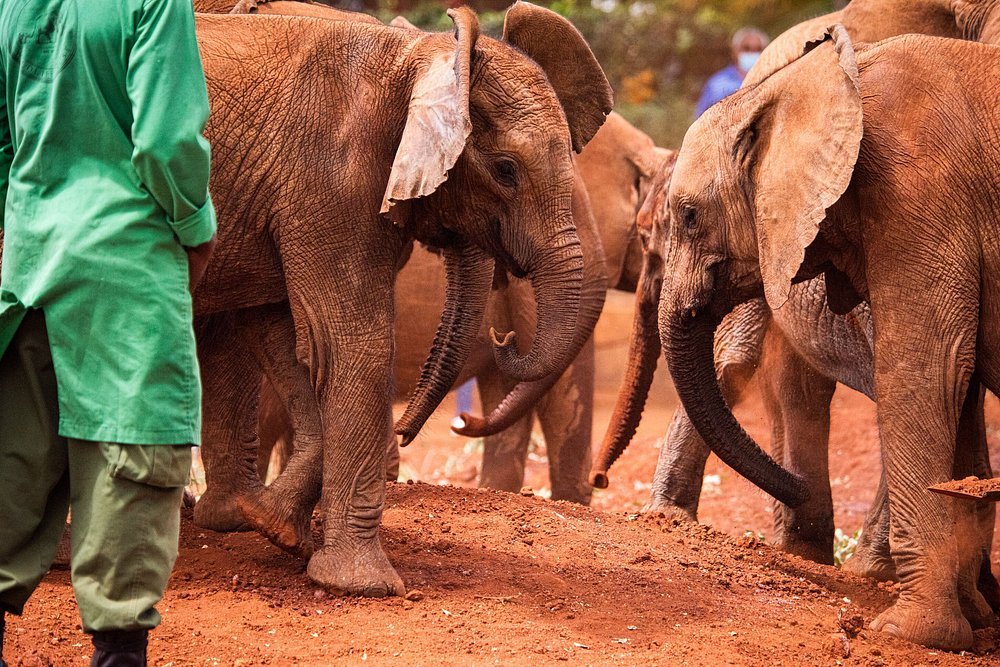
The orphaned elephants come out from the forest in groups for their milk feed. Each animal has its own background, and the keepers share information about the elephants currently at the Nursery.
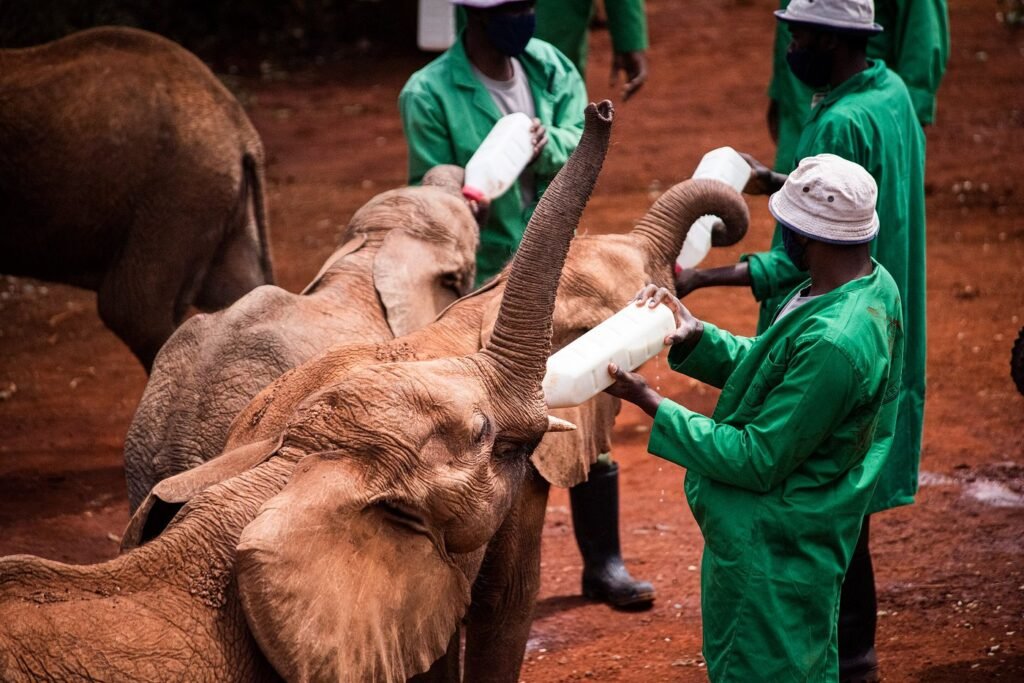
2. Observe feeding time
Milk feeding is an important part of the care provided to young elephants that still require specialist nutrition.
The experience gives visitors an opportunity to understand some of the work involved in caring for vulnerable animals.
3. Watch mud bathing and play
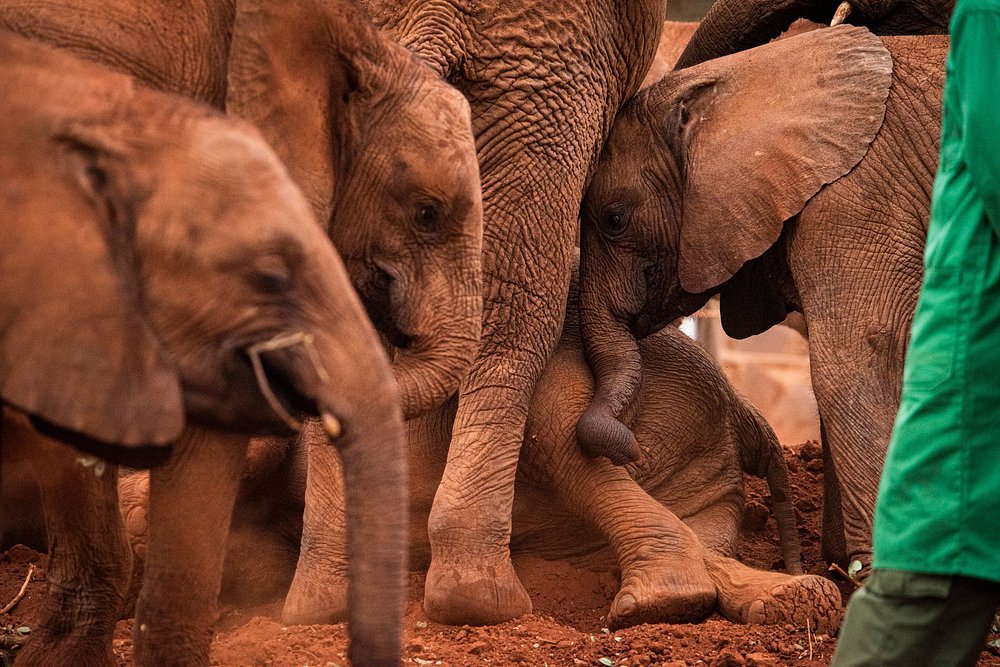
After feeding, the elephants may gather around the mud bath, play with one another, dust themselves or engage in the energetic behaviour typical of young animals.
The exact activity varies from day to day. These are wild animals in rehabilitation, not performers following a script.
4. Learn from the keepers
A senior keeper introduces the herd and explains aspects of the Trust’s conservation work. Visitors also have an opportunity to ask questions.
The session offers a valuable introduction to elephant rescue and rehabilitation, but it is only a short window into the much longer process of preparing an elephant for life in the wild.
Can you touch or feed the baby elephants?
No. Public visitors are not permitted to feed or directly interact with the orphaned elephants.
The Trust limits human contact to support the animals’ eventual reintegration into the wild. Feeding and direct care are carried out by the keepers.
Visitors should remain in the designated viewing areas and follow staff instructions throughout the session.
Occasionally, an elephant may approach the viewing barrier, but that does not mean visitors are permitted to touch it.
Can you take photographs?
The Trust allows photographs and video for personal use only during the public visit. Commercial use of content filmed at the Nursery is prohibited under its published visitor rules.
If you are a travel creator, journalist, commercial photographer or safari operator planning to use footage for marketing, obtain the relevant permission directly from the Trust before filming or publishing content.
Please also keep phones silent and avoid calls during the visit so that other guests can listen to the keeper’s presentation.
Is the Sheldrick elephant orphanage worth visiting?
For visitors interested in elephants and wildlife conservation, the Nairobi Nursery can be a meaningful addition to a Nairobi itinerary.
Its value lies in more than the chance to see young elephants. The visit introduces the rescue and rehabilitation process and explains why preparing orphaned elephants for eventual life in the wild takes time, specialist care and long-term conservation work.
It is particularly suitable for:
- Wildlife and conservation enthusiasts.
- Families with children who meet the visit’s requirements.
- First-time visitors to Nairobi.
- Students interested in wildlife management and conservation.
- Travellers who want a guided Nairobi excursion before a longer safari.
If your main goal is to observe wildlife roaming freely, consider adding a game drive in Nairobi National Park rather than treating the Nursery visit as a substitute for a safari.
Can you combine the visit with Nairobi National Park?
Yes. Since the Nursery is accessed through Nairobi National Park, you may wish to plan a game drive as part of the same outing.
The Trust itself encourages visitors to consider exploring the park after their Nursery visit. Nairobi National Park is home to wildlife including rhinos, lions, giraffes, buffaloes, zebras and many other species.
However, the Nursery session ends at noon, and your additional activities will require enough time, suitable transport and any necessary arrangements.
A game drive is a separate experience: the animals are free-roaming, and sightings cannot be guaranteed.
Learn more about our Nairobi National Park half-day private safari if you would like to explore a guided game drive.
Can you combine the elephant orphanage with the Giraffe Centre?
It may be possible to combine the Nursery with the Giraffe Centre or other Nairobi attractions, depending on opening hours, reservations, travel time and your preferred pace.
Before planning a multi-stop day, check the current admission arrangements for every attraction. Do not assume that an attraction’s ticket or reservation is included in the Nursery donation.
For a broader itinerary, explore our Nairobi excursions and full-day Nairobi excursion options.
If you have a flight to catch or are visiting during a layover, leave a comfortable buffer for traffic and airport procedures.
What should you wear and bring?
The public visit takes place outdoors, so preparation makes the experience more comfortable.
- Wear comfortable shoes suitable for an outdoor setting.
- Bring a hat and sunscreen.
- Carry drinking water.
- Choose clothing appropriate for the weather.
- During rainy periods, consider footwear that can cope with muddy conditions.
- Keep your phone silent during the presentation.
- Carry your official booking confirmation.
- Make sure you have completed the required park-entry payment.
The Trust says refreshments are not provided at the Nursery. Follow its current instructions about what visitors may bring into the venue.
How can Annest Kenya Safaris help plan your visit?
Annest Kenya Safaris can help you plan the transport and wider Nairobi itinerary around your confirmed Nursery reservation.
Depending on your requirements, we can discuss:
- Pickup from your Nairobi hotel or another agreed location.
- Transport to the Nursery gate.
- A Nairobi National Park game drive.
- A broader Nairobi sightseeing itinerary.
- Connections with a longer Kenya safari.
The Trust controls its own public visit, booking confirmation and entry rules. If you use a tour operator, make sure your official Nursery booking is confirmed separately and that the final quotation explains which transport and entry costs are included.
Plan your Nairobi elephant orphanage visit
Let us know your preferred date, group size, pickup location and whether you want to add a game drive or other Nairobi attractions.
Contact Annest Kenya Safaris
- Call or WhatsApp: +254 112 458 884
- Email: booking@annestkenyasafaris.com
- Email: info@annestkenyasafaris.com
- Website: annestkenyasafaris.com
Ready to plan your Nairobi wildlife experience? Explore our Nairobi excursions or contact our team to discuss your itinerary.
Frequently asked questions
What is the official name of the David Sheldrick Elephant Orphanage?
The organisation is now known as the Sheldrick Wildlife Trust. Its Nairobi facility is commonly called the Nairobi Nursery, while many travellers still search for it using the older name, David Sheldrick Wildlife Trust or David Sheldrick Elephant Orphanage.
What time is the Sheldrick Wildlife Trust open to the public?
The regular public Nursery visit takes place from 11:00 AM to 12:00 noon, every day except 25 December, according to the Trust’s current visitor guidance.
Do I need to book the elephant orphanage in advance?
Yes. Advance booking is compulsory, and the Trust does not accept same-day bookings. Wait for an official confirmation before travelling.
How much does the Sheldrick elephant orphanage cost?
The Trust’s published minimum Nursery donation is US$20 for an adult aged 12 or above and US$5 for a child under 12, with separate published amounts for qualifying Kenya residents. Nairobi National Park entry fees are additional. Check the official website for current requirements.
Is the Nairobi National Park entry fee included in the Nursery donation?
No. The Nursery donation and the KWS park entry fee are separate charges. Visitors must account for both.
Can I visit the elephant orphanage without a game drive?
The Nursery visit is a separate scheduled experience, but visitors must still pay the applicable park entry fee to reach it. A game drive is an optional additional activity and requires suitable arrangements.
Can I touch or feed the baby elephants?
No. Visitors observe the elephants from designated areas. Only the keepers are permitted to feed and directly care for them during the public visit.
Can I take photos or videos?
The Trust permits photography and video for personal use only during the public visit. Commercial filming or use requires appropriate permission.
Can Annest Kenya Safaris book the visit for me?
Annest can help plan transport and the wider Nairobi itinerary. The Trust states that its own official booking confirmation is required for entry. If a tour operator assists with arrangements, make sure you receive that confirmation.
How early should I arrive?
The Trust recommends arriving at or before 10:30 AM to allow time for park-entry procedures. The public session cannot be delayed or extended for late arrivals.
Can I visit the Nursery during a Nairobi layover?
It may be possible if your layover is long enough for airport procedures, transport, the fixed visiting session and your return to the airport. Allow a substantial buffer and confirm the schedule before booking.
Can I adopt an orphaned elephant?
The Trust offers adoption or fostering programmes that support its conservation work. Review the official adoption information for current contributions and benefits.