
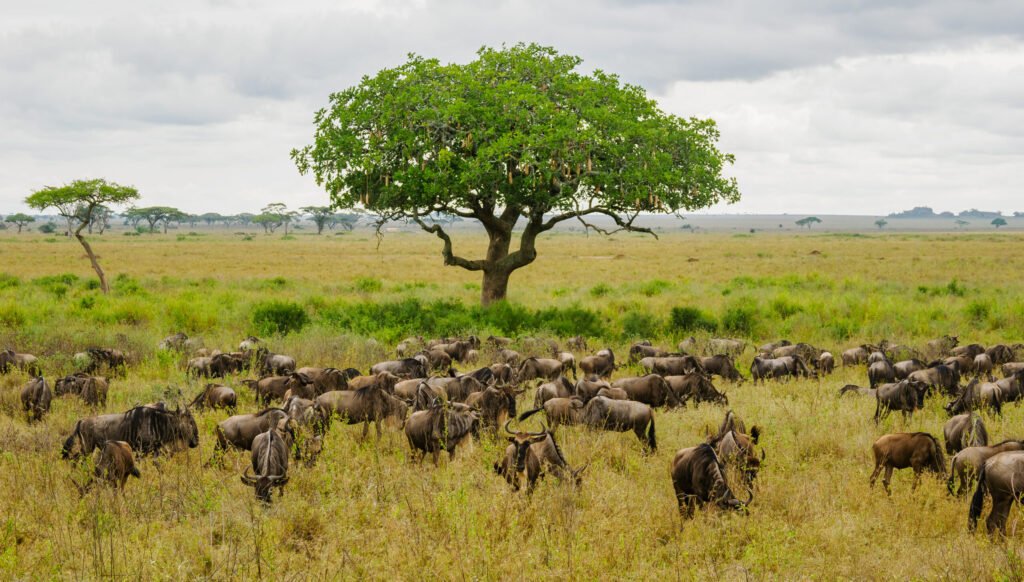
The Great Wildebeest Migration: Africa’s Most Powerful Wildlife Event
The Great Wildebeest Migration is one of the most extraordinary natural events on the planet — a continuous, year-round movement of wildlife across the vast ecosystems of Tanzania’s Serengeti and Kenya’s Masai Mara. Every year, more than 1.5 million wildebeest, joined by zebras and gazelles, follow ancient migratory routes in search of fresh grazing.
This epic journey is driven by survival. Rainfall patterns determine where grass grows, predators follow the herds, and dramatic river crossings test nature’s balance. A wildebeest migration safari is not just a safari — it is witnessing life at its rawest and most authentic.
What Is the Great Wildebeest Migration?
The Great Wildebeest Migration is a massive circular movement covering over 1,800 miles annually across the Serengeti–Mara ecosystem. Unlike migrations that happen once a year in one location, this is a dynamic, ever-moving spectacle.
The migration includes:
- Wildebeest (the primary drivers)
- Plains zebras that graze ahead of the herds
- Gazelles that follow behind
- Predators such as lions, leopards, cheetahs, hyenas, and crocodiles
This makes a migration safari in Kenya and Tanzania the richest wildlife experience in Africa.
How the Wildebeest Migration Moves Through the Year
Southern Serengeti & Ndutu (January – March)
This is the calving season, when hundreds of thousands of wildebeest calves are born within weeks. Predator sightings peak, making this phase ideal for photographers and wildlife enthusiasts.
Central & Western Serengeti (April – June)
As grass dries in the south, the herds move north through Seronera and toward the Grumeti River, where the first dramatic river crossings begin.
Masai Mara Migration (July – October)
The most famous stage of the Masai Mara migration occurs when the herds cross the Mara River. These crossings are unpredictable and intense, often involving crocodile attacks and large predator concentrations.
Northern Serengeti & Return South (November – December)
As short rains begin, the herds gradually move back into Tanzania, completing the migration cycle.
Why the Great Wildebeest Migration Is Unlike Any Other Safari
A Great Wildebeest Migration safari offers experiences no other safari can match:
- Enormous wildlife concentrations
- Non-stop predator action
- Iconic river crossings
- Vast open landscapes
- A different experience every month of the year
No two migration safaris are ever the same — each day unfolds differently depending on timing, location, and natural conditions.
Masai Mara vs Serengeti: Where Should You Go?
Both destinations offer exceptional migration experiences:
- Masai Mara migration safaris
Best for dramatic river crossings and dense predator sightings. - Serengeti migration safaris
Ideal for calving season, fewer crowds, and extended migration viewing.
Many travelers choose combined Kenya–Tanzania migration safaris for the most complete and immersive experience.
Why Book Your Migration Safari with Annest Kenya Safaris?
Planning a migration safari requires precise timing, local knowledge, and expert logistics. Annest Kenya Safaris offers:
- Deep local expertise from Kenyan-based safari specialists
- Custom-designed private migration safaris
- Carefully selected lodges and mobile camps near migration routes
- Flexible itineraries aligned with real-time migration movements
Speak with our safari experts to plan your ideal wildebeest migration safari — tailored to your travel style, dates, and budget.
FAQs – Great Wildebeest Migration
The migration happens year-round. July–October is best for Mara River crossings in Kenya, while January–March is ideal for calving season in the Serengeti.
The Mara River in the Masai Mara and the Grumeti River in the Serengeti are the most famous crossing points.
The migration is natural and unpredictable, but with expert planning and flexible itineraries, sightings are highly likely.
Yes. Private wildebeest migration safaris offer the best flexibility, personalized guiding, and exclusive game viewing.
Most travelers choose 5–10 days to follow the migration effectively and increase viewing opportunities.
Absolutely. The migration offers constant wildlife action and is one of the best introductions to African safaris.